Marbill Coaches Stadium: The Home of St Mirren FC in Paisley
Popular
online sport betting has become part of the wider digital football landscape, but the experience of following a club remains closely connected to its home ground. For St Mirren FC, that place is the Marbill Coaches Stadium in Paisley, Scotland. More than a venue for competitive football, it represents the club's connection with the local community and its long-standing identity.
From Love Street to a Modern Football Ground
St Mirren's current home opened in January 2009, replacing the historic Love Street stadium, where the club had played for generations. The move marked an important transition for the Paisley side, providing modern facilities and a purpose-built environment suited to the demands of contemporary professional football.
The stadium's first competitive match took place on 31 January 2009, when St Mirren faced Kilmarnock in a Scottish Premier League fixture. The game ended in a 1–1 draw, giving the new ground an appropriately memorable beginning.
The decision to relocate was not simply about replacing an ageing stadium. It also reflected the changing financial and operational requirements of Scottish football. Modern facilities, improved spectator accommodation and opportunities for additional commercial activity were increasingly important to clubs seeking long-term stability.
Stadium Design and Capacity
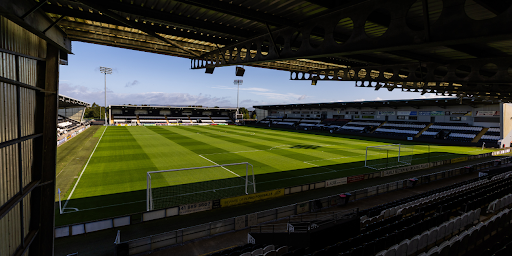
Located on Greenhill Road, the Marbill Coaches Stadium is an all-seater venue with four covered stands surrounding a natural-grass pitch. Its capacity is approximately 8,000 spectators, making it considerably more compact than the grounds of Scotland's largest clubs.
However, its relatively modest dimensions contribute to its character. The four-stand configuration keeps supporters close to the playing area, creating an environment where crowd reactions remain an important part of the matchday experience.
The North Stand is generally allocated to visiting supporters, while home fans occupy the other sections. The stadium also provides facilities for spectators with disabilities, including dedicated viewing areas and accessible seating arrangements.
Its location is another practical advantage. Paisley St James railway station is situated close to the ground, providing convenient connections for supporters travelling from Glasgow and surrounding areas. Glasgow Airport is also nearby, making the stadium relatively accessible to visitors from outside Scotland.
The Story Behind the Stadium's Name
The ground has experienced several naming changes since its opening. Initially known as St Mirren Park, it subsequently carried the names Paisley 2021 Stadium and Simple Digital Arena before becoming the SMiSA Stadium in November 2020.
That particular name had a deeper meaning. SMiSA, the St Mirren Independent Supporters Association, played a central role in the club's transition towards fan ownership. The stadium's renaming recognised the supporters' financial commitment and their contribution to securing the club's future.
In 2021, St Mirren completed its transition to majority fan ownership, with SMiSA acquiring a 51% stake. This development strengthened the relationship between the football club and the community it represents.
In 2026, a new three-season sponsorship agreement with Marbill Coaches introduced the stadium's current name. The partnership also extended an existing relationship with the West of Scotland transport company, which had served as the club's official bus partner since 2018.
More Than a Matchday Venue
The stadium's importance extends beyond the ninety minutes of a football match. It provides a setting for community activities, commercial events and initiatives connected with the club's charitable foundation.
For St Mirren, maintaining a strong relationship with Paisley is particularly important. The club was founded in 1877, and its history is closely intertwined with the town's sporting and social identity. The ground on Greenhill Road represents a modern continuation of that relationship.
The Marbill Coaches Stadium may not have the scale of Celtic Park or Ibrox, but its significance should not be measured by capacity alone. It provides St Mirren with a modern home while preserving the close connection between the team and its supporters.
As football consumption increasingly moves between stadiums, television broadcasts and digital platforms, discussions about the sport also extend to services such as an
online game betting app. Nevertheless, the atmosphere created by supporters inside a ground remains an essential part of football's appeal. For St Mirren, the Marbill Coaches Stadium continues to provide the setting for that shared experience.
